

 Events
Ultimate Travel Guide: Major Tourist Attractions in Vietnam
Vietnam is an extraordinary country of breathtaking natural beauty, rich history, vibrant cultures, and world-renowned gastronomy. From soaring emerald limestone pillars in tranquil bays and centuries-old imperial cities to emerald rice terraces and bustling modern metropolises, discovering the major tourist attractions in vietnam is a dream journey for every type of global traveler.
Whether you are planning a two-week adventure or a multi-month exploration, this definitive guide highlights the top tourist spots, iconic landmarks, hidden gems, practical travel advice, and regional highlights across Vietnam.
Northern Vietnam: Epic Landscapes & Ancient Heritage
Northern Vietnam is defined by dramatic mountain scenery, misty karst landscapes, ethnic minority cultures, and a deep sense of national history.
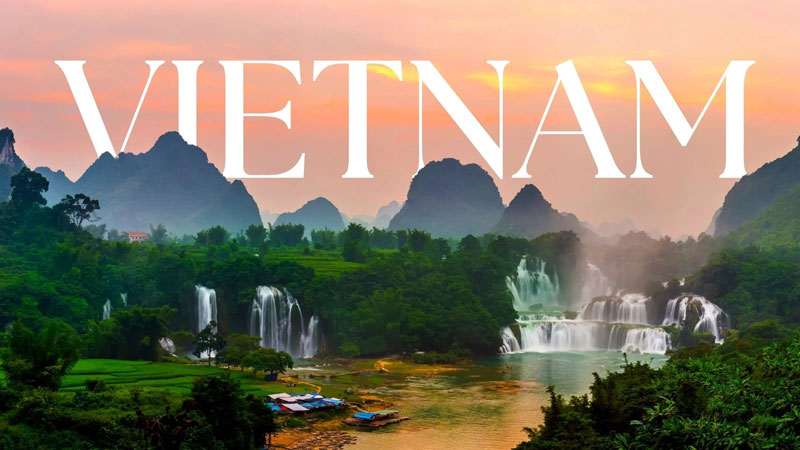
1. Ha Long Bay & Lan Ha Bay (UNESCO World Heritage Site)
- Location: Quang Ninh Province / Hai Phong (~2.5 hours east of Hanoi)
- Best Time to Visit: March to May and September to November
- Highlights: Overnight luxury cruises, kayaking through hidden lagoons, limestone caves, floating fishing villages.
No list of major tourist attractions in vietnam is complete without Ha Long Bay. Featuring over 1,600 towering limestone islands and islets rising dramatically out of emerald-green waters, Ha Long Bay is a certified UNESCO World Heritage Site and one of the New Seven Wonders of Nature.
According to local legend, dragons descended from heaven to spit jewels and jade into the sea, forming natural barriers that defended Vietnam against invaders—these jewels transformed into the majestic rock pillars seen today.
Top Things to Do:
- Overnight Cruise: Book a 2-day/1-night or 3-day/2-night cruise to venture deep into the bay away from day-trip crowds.
- Explore Sung Sot (Surprise) Cave: Marvel at giant stalactites and stalagmites illuminated in massive cavern chambers.
- Kayak in Lan Ha Bay: Located south of Ha Long Bay, neighboring Lan Ha Bay offers cleaner waters, quieter secluded beaches, and white-sand coves perfect for kayaking.
2. Hanoi: The Historic Capital
- Location: Red River Delta, Northern Vietnam
- Highlights: Hanoi Old Quarter, Hoan Kiem Lake, Temple of Literature, Imperial Citadel of Thang Long.
With a history spanning over 1,000 years, Hanoi is Vietnam’s soulful capital city. It seamlessly blends traditional Asian heritage with French colonial architectural charms, tree-lined boulevards, serene lakes, and an internationally acclaimed street food culture.
Key Attractions in Hanoi:
- Hanoi Old Quarter: A maze of 36 historic streets, each historically dedicated to a specific trade (silk, silver, bamboo, spices). Today, it is an energetic hub of craft shops, cozy cafes, street food vendors, and boutique hotels.
- Hoan Kiem Lake & Ngoc Son Temple: Located in the city center, this iconic lake is a peaceful retreat where locals gather at dawn for Tai Chi. Crossing the crimson Huc Bridge leads to the picturesque Ngoc Son Temple on a small island.
- Temple of Literature (Van Mieu): Built in 1070, this serene Confucian temple complex housed Imperial Vietnam’s first national university.
- Ho Chi Minh Mausoleum: A solemn monument where visitors can pay respects to the founding father of modern Vietnam.
3. Sapa & Mu Cang Chai: Terraced Rice Fields & Ethnic Cultures
- Location: Lao Cai & Yen Bai Provinces (Northwestern Highlands)
- Highlights: Fansipan Peak, trekking through Hmong and Dao villages, dramatic mountain passes.
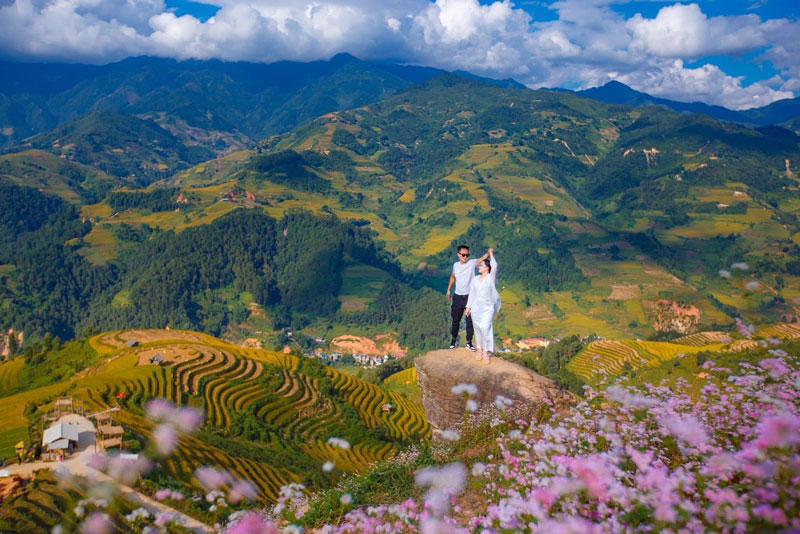
Nestled near the Chinese border, Sapa is famous for its stunning valley vistas, misty mountain peaks, and intricate terraced rice paddies carved into steep hillsides over generations by indigenous ethnic minority groups (such as the Black Hmong, Red Dao, and Tay).
Highlights & Experiences:
- Conquer Mount Fansipan: Known as the “Roof of Indochina,” Fansipan stands at 3,143 meters. Travelers can reach the summit via a scenic 15-minute cable car ride or an adventurous 2-day guided trek.
- Trek through Muong Hoa Valley: Walk through golden rice terraces (peak season: August–September) and spend the night at an authentic local homestay.
- Mu Cang Chai: For travelers seeking fewer crowds, the rice terraces of Mu Cang Chai offer some of the most breathtaking photographer viewpoints in all of Southeast Asia.
4. Ninh Binh: The “Ha Long Bay on Land”
- Location: Ninh Binh Province (~1.5 hours south of Hanoi)
- Highlights: Trang An Landscape Complex, Tam Coc boat tours, Hang Mua Peak, Bich Dong Pagoda.
Ninh Binh is renowned for its surreal landscape where towering limestone monoliths rise abruptly out of lush green rice fields and serpentine rivers.
Must-Visit Spots in Ninh Binh:
- Trang An Boat Tour: Board a traditional wooden rowboat navigated by skilled local rowers who often use their feet! Sail through limestone caves, river tunnels, and ancient temples embedded in the rock faces.
- Hang Mua (Mua Cave) Viewpoint: Climb 500 stone steps up a dragon-crested peak to enjoy a legendary 360-degree panoramic view over the Tam Coc river valley.
- Hoa Lu Ancient Capital: Discover the historical site that served as Vietnam’s capital during the 10th and 11th centuries under the Dinh and Early Le dynasties.
Central Vietnam: Imperial Cities & Coastal Wonders
Central Vietnam offers an incredible blend of historic imperial palaces, UNESCO-listed ancient towns, world-record caves, and sun-drenched coastal beaches.
5. Hoi An Ancient Town (UNESCO World Heritage Site)
- Location: Quang Nam Province (~45 minutes south of Da Nang)
- Highlights: Japanese Covered Bridge, lantern-lit streets, tailor shops, pristine local beaches.
Hoi An is widely regarded as one of the most charming tourist attractions in Vietnam. As a major Southeast Asian trading port from the 15th to the 19th century, Hoi An features remarkably preserved architecture influenced by Vietnamese, Chinese, Japanese, and European design.
Unforgettable Experiences:
- Nighttime Lantern Walk: Every evening, motor vehicles are banned from the town center, and thousands of colorful silk lanterns illuminate the mustard-yellow shopfronts and Thu Bon River.
- Custom Tailoring: Hoi An is world-famous for its master tailors who can craft custom suits, dresses, and leather shoes within 24 to 48 hours at very reasonable prices.
- Culinary Excellence: Taste signature local dishes found nowhere else, such as Cao Lau (chewy noodles with pork and greens), Hoan Thanh (crispy wontons), and Bánh Mì Phuong.
6. Hue: The Imperial Capital
- Location: Thua Thien Hue Province
- Highlights: Imperial City (The Citadel), Royal Tombs of Nguyen Emperors, Perfume River, Thien Mu Pagoda.
Situated on the banks of the picturesque Perfume River, Hue served as the national capital of Vietnam during the Nguyen Dynasty (1802–1945). It remains the spiritual and cultural heart of Vietnam’s imperial heritage.
Top Attractions in Hue:
- The Imperial Citadel: A vast walled fortress containing the Forbidden Purple City, royal palaces, ancestral temples, and grand courtyards modeling Beijing’s Forbidden City.
- Royal Tombs: Visit the opulent, artfully designed tombs of former emperors scattered along the river, including the extravagant Lăng Khải Định (blending European Gothic and Vietnamese art) and the peaceful Lăng Tự Đức.
- Thien Mu Pagoda: An iconic seven-story octagonal pagoda standing on a hill overlooking the river, serving as an enduring symbol of Hue.
7. Da Nang & Ba Na Hills
- Location: Central Coast of Vietnam
- Highlights: The Golden Bridge (Hands Bridge), Dragon Bridge, My Khe Beach, Marble Mountains.
Da Nang is a vibrant, modern coastal city famous for its broad sandy beaches, luxury resorts, clean boulevards, and spectacular bridges.
Key Sights:
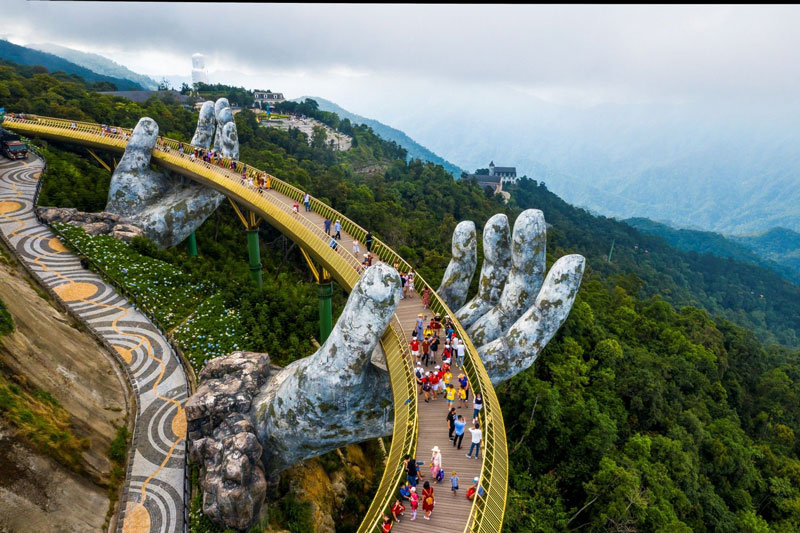
- Golden Bridge at Sun World Ba Na Hills: Held aloft by two giant weathered stone hands emerging from the mountainside, this architectural marvel sits over 1,400 meters above sea level and offers panoramic mountain views.
- Dragon Bridge (Cầu Rồng): A dramatic bridge shaped like a yellow dragon spanning the Han River. On Saturday and Sunday evenings at 9:00 PM, the dragon breathes real fire and water for crowds of spectators.
- Marble Mountains (Ngũ Hành Sơn): A cluster of five marble and limestone hills named after the five elements, housing hidden cave sanctuaries, Buddhist altars, and panoramic climbing viewpoints.
8. Phong Nha-Ke Bang National Park
- Location: Quang Binh Province
- Highlights: Son Doong Cave (world’s largest cave), Paradise Cave, Phong Nha Cave, jungle ziplining.
For adventure seekers, Phong Nha-Ke Bang National Park is an unparalleled wonderland. Home to the oldest karst mountains in Asia (formed over 400 million years ago), this UNESCO World Heritage Site contains hundreds of massive underground cave systems, subterranean rivers, and pristine jungle.
Notable Caves:
- Son Doong Cave: The world’s largest cave by volume, so massive that it possesses its own weather system, internal clouds, jungle, and fast-flowing river. (Tours require advance booking and physical conditioning).
- Paradise Cave (Động Thiên Đường): Accessible to all travelers, this cave features a wooden boardwalk extending over a kilometer through awe-inspiring chambers filled with delicate limestone formations.
- Dark Cave (Hang Tối): Offers an adventurous day trip involving ziplining over a emerald river, swimming into dark chambers, and enjoying a natural therapeutic mud bath deep inside the cave.
Southern Vietnam: Bustling Metropolises & River Life
Southern Vietnam is characterized by economic vitality, tropical heat, lush agricultural waterways, and important modern historical landmarks.
9. Ho Chi Minh City (Saigon)
- Location: Southeastern Region
- Highlights: War Remnants Museum, Independence Palace, Saigon Central Post Office, Notre-Dame Basilica, Ben Thanh Market.
Ho Chi Minh City (formerly and still widely called Saigon) is Vietnam’s largest city and financial powerhouse. It is a thrilling sensory explosion of non-stop energy, soaring modern skyscrapers, historic French colonial landmarks, alleyway food stalls, and millions of motorbikes.
Top Attractions in Saigon:
- War Remnants Museum: A profoundly moving museum detailing the reality and global impact of the Indochina and Vietnam Wars through military gear, photography, and historical documents.
- Independence Palace (Reunification Palace): A preserved mid-century modernist presidential palace where the Vietnam War officially ended on April 30, 1975, when a tank crashed through its main gates.
- Saigon Central Post Office & Notre-Dame Basilica: Beautiful examples of late 19th-century French architecture located in the heart of District 1.
- Nguyen Hue Walking Street: A wide pedestrian boulevard lined with cafes, shops, and the famous Cafe Apartment Building (No. 42 Nguyen Hue).
10. The Mekong Delta: Vietnam’s “Rice Bowl”
- Location: Southwestern Vietnam (covering provinces like Can Tho, Ben Tre, and My Tho)
- Highlights: Floating markets, sampan boat tours, coconut candy workshops, fruit orchards.
Spanning over 39,000 square kilometers, the Mekong Delta is a vast water labyrinth where the mighty Mekong River empties into the East Sea through a network of distribution channels. Life here revolves almost entirely around the water.
Top Activities in the Mekong Delta:
- Explore Cai Rang Floating Market: Located near Can Tho, this is the largest wholesale floating market in the delta, where vendors hang their produce (pineapples, watermelons, squashes) from tall wooden poles on their boats to advertise their goods.
- Rowing Sampan Canal Cruises: Glide through narrow palm-shaded canals under tropical fruit canopies in Ben Tre or My Tho.
- Sample Local Delicacies: Enjoy freshly caught Elephant Ear Fish cooked crisp and wrapped in rice paper rolls with fresh herbs.
11. Cu Chi Tunnels
- Location: ~60 km northwest of Ho Chi Minh City
- Highlights: Underground tunnel network, booby trap demonstrations, military history.
The Cu Chi Tunnels are an immense underground network of interconnected tunnels that served as a strategic military stronghold for the Viet Cong during the Vietnam War. Spanning over 250 kilometers, this subterranean city housed living quarters, field hospitals, kitchens, command centers, and weapon storage.
Visitors can learn about the creative engineering behind the ventilation systems, view hidden trap doors, and crawl through sections of the widened tunnels to experience underground soldier conditions firsthand.
Islands & Highlands: Tropical Paradises & Mountain Escapes
When you wish to relax on white-sand beaches or cool off in refreshing mountain air, Vietnam features premier island resorts and highland retreats.
12. Phu Quoc Island
- Location: Gulf of Thailand (Kien Giang Province)
- Highlights: Long Beach, Starfish Beach (Rach Vem), Hon Thom Cable Car, Phu Quoc National Park.
Situated in the warm waters of the Gulf of Thailand, Phu Quoc is Vietnam’s premier island getaway. Blessed with clear turquoise waters, palm-fringed white beaches, luxury international resorts, and fresh seafood, it offers an ideal destination for relaxation.
Highlights on Phu Quoc:
- Cable Car to Hon Thom Island: Ride the world’s longest non-stop three-rope cable car over open turquoise ocean water and fishing fleets.
- Sunset Town & Kiss Bridge: A colorful European-inspired coastal village featuring dramatic sunset views and nightly firework shows.
- Phu Quoc Night Market: Sample grilled sea urchins, buttered scallops, fresh oysters, and coconut ice cream in Duong Dong town.
13. Da Lat: The City of Eternal Spring
- Location: Central Highlands (Lâm Đồng Province)
- Highlights: Crazy House, Tuyen Lam Lake, French colonial villas, flower gardens, pine forests.
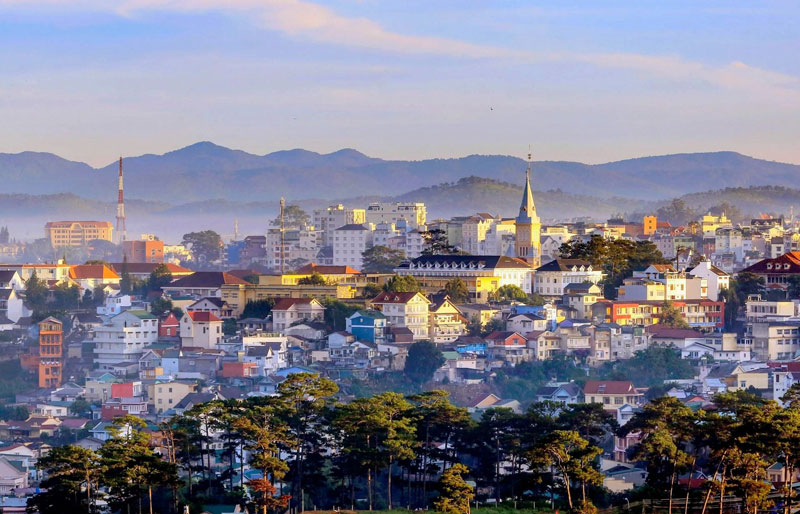
Perched at 1,500 meters above sea level in the Central Highlands, Da Lat enjoys a cool, spring-like climate year-round. Originally developed as a hill station resort by French colonists seeking relief from coastal heat, Da Lat is famous for its pine trees, romantic lakes, waterfalls, and flower farming.
Fun Sights in Da Lat:
- Hằng Ngạ Guesthouse (Crazy House): An eccentric, surrealist architectural masterpiece featuring tree-trunk staircases, winding spiderweb bridges, and fairytale animal-themed rooms.
- Alpine Coaster at Datanla Waterfalls: Control your own speed on a toboggan coaster winding down through pine forests directly to the base of Datanla waterfall.
- Cafe Culture: Relax at hillside coffee shops overlooking terraced flower farms and misty valleys.
See also: Ultimate Travel Guide: Top Tourist Attractions in Vietnam, Ho Chi Minh City
Essential Vietnam Travel Tips
To make the most of your trip across the major tourist attractions in Vietnam, keep these practical tips in mind:
1. Best Time to Visit Vietnam
Because Vietnam is long and geographically varied, weather patterns differ dramatically between region:
- North (Hanoi, Ha Long Bay, Sapa): Spring (March–May) and Autumn (September–November) offer dry, comfortable weather. Winters (December–February) can be chilly in mountain areas.
- Center (Hoi An, Hue, Da Nang): Dry season runs from February to August. Avoid heavy rainfall and potential typhoons during October and November.
- South (Ho Chi Minh City, Mekong Delta, Phu Quoc): Tropical year-round. The dry season is from December to April; the wet season (short afternoon rains) runs from May to November.
2. Getting Around
- Domestic Flights: Vietnam Airlines, VietJet Air, and Bamboo Airways offer frequent, affordable connections between major regional hubs (Hanoi, Da Nang, Ho Chi Minh City, Phu Quoc, Hue).
- Train Travel: The Vietnam Railways network (including the iconic Reunification Express) offers scenic train journeys along the coast.
- Ride-Hailing: Download the Grab app for fast, reliable car and motorbike taxis in major cities without language barriers or haggling over price.
3. Currency & Payments
- Currency: Vietnamese Dong (VND). $1 USD equals approximately 24,000–25,000 VND.
- Cash is King: While major hotels, upscale restaurants, and malls accept credit cards, cash is essential for street food vendors, local markets, taxis, and small family shops.
4. Cultural Etiquette
- Dress Modestly at Temples: When visiting pagodas, temples, or historic mausoleums, cover your shoulders and knees. Remove your shoes where indicated.
- Crossing the Street: Walk at a steady, predictable speed. Do not stop suddenly or make unexpected movements; motorbike drivers will smoothly judge your speed and navigate around you.
Vietnam is a captivating destination that leaves an indelible mark on every visitor. From the emerald limestone karsts of Ha Long Bay and the ancient streets of Hoi An to the vibrant street life of Ho Chi Minh City and the peaceful waterways of the Mekong Delta, the major tourist attractions in vietnam offer an unforgettable tapestry of culture, nature, and hospitality.
Pack your bags, bring a healthy appetite for incredible food, and prepare to discover one of the most dynamic and enchanting nations in Asia!
CONTACT INFORMATION:
- Address: No. 152 Khuat Duy Tien, Thanh Xuan, Hanoi, Vietnam
- Hotline: 0983.686.183
- Email: info@vietlinktour.com
- Website: https://vietlinktour.com/